
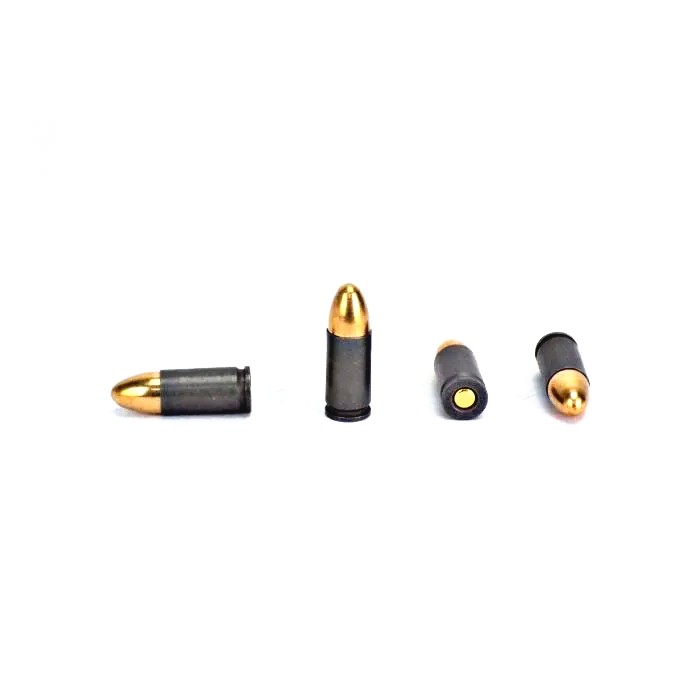
9mm 115gr vs 124gr vs 147gr: Which Bulk Grain Weight Should You Choose for Training?
Navigating the options for handgun ammunition often brings shooters to a fundamental crossroad. When stocking up on range supply, evaluating 9mm 115gr vs 124gr vs 147gr configurations is one of the most critical decisions you will make for your shooting platform.
While all three bullet weights fit standard 9x19mm Parabellum chambers, they behave dramatically differently downrange. The bullet weight dictates muzzle velocity, felt recoil impulse, cycling reliability, point-of-impact (POI) shifts, and total cost per round. Choosing the wrong bullet weight for your specific training goals can lead to unnecessary recoil, stovepipe malfunctions in custom handguns, or mismatched zero settings between your range target rounds and your self-defense carry cartridges.
Whether you are running high-volume drills with a micro-compact concealed carry pistol, running speed courses in competitive action shooting, or running suppressed optics-ready handguns, matching the correct grain weight to your platform is essential. Here is a comprehensive technical breakdown analyzing the mechanics, physics, and cost structures of all three dominant 9mm projectile weights.
What Does Bullet “Grain” Weight Actually Mean?
Before comparing performance differences, it is crucial to understand what a “grain” represents in ammunition specifications. In the shooting sports community, bullet weight is measured in grains (gr) rather than grams or ounces.
A grain is an ancient unit of mass derived from the average mass of a single cereal grain. Mathematically, the conversion ratio is fixed:
When comparing a 115-grain bullet to a 147-grain bullet, you are looking at a 32-grain variance in the physical mass of the lead and copper projectile itself. It is important to note that “grain” refers strictly to the mass of the bullet projectile, not the amount of gunpowder loaded inside the brass casing.
To compensate for the heavier mass of a 147gr projectile, factory loaders use a lighter powder charge to maintain safe chamber pressure limits set by SAAMI (Sporting Arms and Ammunition Manufacturers’ Institute). Conversely, lighter 115gr projectiles carry a larger powder charge to drive the bullet out of the barrel at significantly higher velocities.
Deep Dive: 9mm 115 Grain (The High-Velocity Standard)
The 115-grain bullet is the undisputed titan of high-volume range training. If you walk into any commercial shooting facility or order loose-pack bulk cases online, 115gr Full Metal Jacket (FMJ) ammunition represents the vast majority of inventory on the market.
+--------------------------+---------------------------------+
| Specification            | 115-Grain Average Metric        |
+--------------------------+---------------------------------+
| Muzzle Velocity (4" bbl) | 1,150 - 1,180 Feet Per Second   |
| Muzzle Energy            | 335 - 355 Foot-Pounds           |
| Sound Barrier Profile    | Supersonic (Creates Sonic Boom) |
| Recoil Characteristics   | Fast, Sharp "Snap"              |
+--------------------------+---------------------------------+
Advantages of 115gr Ammunition
-
Maximum Cost Efficiency: Because 115-grain projectiles require less raw lead and copper during manufacturing, factories produce them at lower material costs. These savings pass directly to the consumer, making 115gr the most budget-friendly option for high-volume range sessions.
-
Widespread Availability: Every major ammunition manufacturer prioritizes 115-grain assembly lines, ensuring consistent availability even during market supply contractions.
-
Flat Trajectory at Short Ranges: Driven by high muzzle velocities (often exceeding 1,150 feet per second out of standard duty barrels), 115gr rounds fly on a flat trajectory across typical defensive engagement distances (0 to 25 yards).
Disadvantages of 115gr Ammunition
-
Snappy Felt Recoil: Physics dictates that kinetic energy scales with the square of velocity ($E_k = \frac{1}{2}mv^2$). The high velocity of 115gr ammunition produces a fast, sharp “snappy” recoil impulse that can drive the front sight post off target quickly in lightweight micro-compact pistols.
-
Inconsistent Cycling in Heavy Springs: Some stiff, optics-ready competition handguns or tight custom builds struggle to cycle lighter 115gr range loads reliably, occasionally producing failure-to-eject or failure-to-feed malfunctions.
(Insert Image 1 Here – Alt Text: Comparing 9mm 115gr vs 124gr vs 147gr ammunition profiles on a loading bench.)
Deep Dive: 9mm 124 Grain (The NATO Duty Benchmark)
If 115-grain is the commercial target standard, 124-grain is the operational military and law enforcement baseline. Standard-issue 9x19mm NATO military ammunition uses a 124-grain projectile loaded to slightly elevated chamber pressures to guarantee reliable cycling in submachine guns and service sidearms under harsh conditions.
+--------------------------+---------------------------------+
| Specification            | 124-Grain Average Metric        |
+--------------------------+---------------------------------+
| Muzzle Velocity (4" bbl) | 1,080 - 1,120 Feet Per Second   |
| Muzzle Energy            | 320 - 345 Foot-Pounds           |
| Sound Barrier Profile    | Supersonic                      |
| Recoil Characteristics   | Smooth, Balanced "Push"         |
+--------------------------+---------------------------------+
Advantages of 124gr Ammunition
-
Ideal Recoil Impulse for Follow-Up Shots: Rather than the violent snap of a 115gr round, 124gr ammunition delivers a smoother, rolling “push” back into the shooter’s palm. Many defensive instructors note that this pulse allows optics dots and iron sights to return to the center of the target more predictably.
-
Superior Mechanical Reliability: The heavier projectile creates greater backpressure during barrel unlocking, assisting slide velocity and cycling action across a wide range of handgun actions.
-
Direct Mirror to Self-Defense Duty Loads: Most modern law enforcement agencies carry 124gr Jacketed Hollow Point (JHP) defensive cartridges (such as Speer Gold Dot or Federal HST). Training with 124gr FMJ bulk cases allows you to replicate the exact point of impact and recoil feel of your defensive duty setup without expending premium carry rounds.
Disadvantages of 124gr Ammunition
-
Slight Cost Premium: Expect to pay a minor 3% to 7% price premium per case over standard 115-grain options due to increased raw material mass.
Deep Dive: 9mm 147 Grain (The Heavy Subsonic Specialist)
The 147-grain cartridge represents the heavy end of the standard 9mm loading spectrum. Originally developed for special operations forces requiring suppressed submachine guns, the 147gr projectile trades high velocity for heavy mass and momentum.
+--------------------------+---------------------------------+
| Specification            | 147-Grain Average Metric        |
+--------------------------+---------------------------------+
| Muzzle Velocity (4" bbl) | 950 - 980 Feet Per Second       |
| Muzzle Energy            | 300 - 325 Foot-Pounds           |
| Sound Barrier Profile    | Inherently Subsonic             |
| Recoil Characteristics   | Soft, Low-Frequency "Thump"     |
+--------------------------+---------------------------------+
Advantages of 147gr Ammunition
-
Inherently Subsonic Performance: The speed of sound at sea level is approximately 1,125 feet per second. Because 147gr rounds leave the muzzle around 950 to 980 fps, they never break the sound barrier. This eliminates the loud “crack” of a sonic boom, making 147gr the gold standard for suppressed shooting setups.
-
Soft, Manageable Recoil: Shooters running competitive action disciplines (like USPSA or IDPA) frequently select 147gr rounds because the low velocity yields a soft, slow slide impulse. This keeps the muzzle exceptionally flat during rapid-fire strings.
-
Deeper Penetration Characteristics: In terminal ballistics, heavy projectiles retain momentum longer through barriers, providing consistent straight-line tracking.
Disadvantages of 147gr Ammunition
-
Higher Price Point: Additional copper and lead mass, combined with specialized powder requirements, makes 147gr bulk cases more expensive than 115gr and 124gr alternatives.
-
Looser Trajectory Arc: Because the bullet travels significantly slower, it experiences greater drop over extended handgun distances (beyond 35 yards), requiring shooters to adjust their sight holdovers.
Ballistics and Performance Comparison Table
To visualize how these three popular loadings compare head-to-head, review this standardized ballistics matrix measured from a standard 4.0-inch service handgun barrel:
| Feature / Metric | 9mm 115 Grain FMJ | 9mm 124 Grain FMJ | 9mm 147 Grain FMJ |
| Average Muzzle Velocity | 1,150 fps | 1,100 fps | 980 fps |
| Muzzle Energy | 338 ft-lbs | 333 ft-lbs | 313 ft-lbs |
| Sonic Profile | Supersonic | Supersonic | Subsonic |
| Recoil Impulse | Fast / Sharp Snap | Balanced Push | Soft / Muted Thump |
| Slide Cycling Force | Standard | High / Very Reliable | Smooth / Moderate |
| Best Suppressor Use | Poor | Marginal | Excellent |
| Cost Scale | Lowest (Budget-Friendly) | Moderate | Highest Premium |
Comparing the Physics: Understanding the 9mm 115gr vs 124gr vs 147gr Recoil Impulse
A common source of confusion among handgun shooters is why a heavier bullet can produce a “softer” feeling recoil impulse than a lighter bullet fired from the exact same firearm. The answer lies in the physics of linear momentum and Newton’s Third Law of Motion.
Total recoil momentum ($p$) imparted to the handgun is directly proportional to the mass of the projectile ($m_p$) multiplied by its velocity ($v_p$), plus the mass of the expanding gas propellant ($m_g$) multiplied by the gas velocity ($v_g$):
Because a 115-grain cartridge requires a larger volume of high-velocity powder to achieve its 1,150+ fps speed, the expanding gases vent out of the muzzle at extreme speeds, acting like a rocket motor that snaps the slide back quickly.
Conversely, a 147-grain round uses a smaller, slower-burning powder charge. The bullet accelerates smoothly down the barrel, spreading the energy transfer over a longer fraction of a millisecond. This reduces the peak acceleration spike felt by your wrists, turning a sharp visual “snap” into a manageable “thump.”
Point-of-Impact (POI) Shifts: How Grain Weight Alters Your Zero
If you zero your red dot sight or iron sights using cheap 115gr range ammo and then load your magazine with heavy 147gr defensive hollow points, your shots will likely miss the target center at 25 yards.
This unexpected shift is caused by barrel time and recoil timing:
-
Slower Bullets Stay in the Barrel Longer: Because a 147gr bullet travels down the barrel slower than a 115gr bullet, it spends slightly more time inside the bore before exiting the muzzle.
-
Recoil Begins Immediately Upon Ignition: The moment the firing pin strikes the primer and powder ignites, the firearm begins rotating upward in your hands due to the axis of recoil sitting above your grip.
-
Higher Impact Point for Heavy Bullets: Because the heavier 147gr bullet remains inside the barrel while the muzzle has already begun its micro-rise, it actually exits the muzzle at a slightly higher upward angle. As a result, heavy bullets frequently impact higher on targets at 15 to 25 yards than lighter, faster bullets.
Key Takeaway: Always match your training round weight to your defensive carry round weight to ensure your optics zero remains identical between practice and real-world applications.
(Insert Image 2 Here – Alt Text: Tactical shooter reviewing point-of-impact differences between 9mm 115gr vs 124gr vs 147gr loads.)
Matching Grain Weight to Your Specific Shooting Discipline
To get the most out of your inventory, align your ammunition choices with your primary shooting goals:
1. Casual Range Practice and High-Volume Drills
If your primary goal is practicing trigger press, sight alignment, and reload mechanics at standard indoor range distances (7 to 15 yards), 115-grain FMJ offers the best value. The lower cost allows you to squeeze significantly more trigger pulls out of your training budget.
2. Duty Preparedness and Tactical Training
If you carry a concealed firearm daily loaded with 124gr JHP defensive rounds, training with 124-grain FMJ is the smartest choice. It provides identical recoil dynamics, slide velocity, and point-of-impact behavior, building muscle memory that directly transfers to your carry setup.
3. Suppressed Firearm Setups
If you run a threaded barrel paired with a sound suppressor, 147-grain FMJ is essential. Because it remains under the speed of sound, you eliminate the loud sonic crack, allowing for a quiet, hearing-safe range experience.
4. Competitive Action Shooting (USPSA/IDPA)
Competitive shooters often prefer 147-grain rounds because the soft, rolling recoil keeps red dot optics tracking smoothly inside the window during rapid double-taps.
Sourcing and Storing Your 9mm Ammunition Inventory
Once you decide which bullet weight fits your shooting style, purchasing in case quantities (1,000-round lots) is the most efficient way to lower your total cost per round. Sourcing full cases dilutes shipping costs across hundreds of rounds while protecting your training schedule against sudden market shortages.
To keep your bulk cases running smoothly for years to come:
-
Store cartridges in gasket-sealed polymer or metal ammo cans.
-
Include desiccant packs inside sealed containers to absorb ambient moisture.
-
Keep inventory off cold concrete floors in a climate-controlled area.
When you are ready to restock your range inventory with premium factory cases, explore BulkAmmoSupplyUSA’s In-Stock 9mm Handgun Ammunition Selection to secure competitive pricing on all major grain weights shipped directly to your door.
FAQ: Common Questions About 9mm 115gr vs 124gr vs 147gr
Will firing 147-grain ammunition damage a compact 9mm handgun?
No. Standard-pressure 147-grain ammunition operates within the exact same SAAMI chamber pressure limits (maximum 35,000 PSI) as 115-grain and 124-grain offerings. It is completely safe for use in all modern, quality-built 9mm handguns.
Why is 115-grain 9mm ammo generally cheaper than 147-grain?
The price gap comes down to raw material volume. A 147-grain bullet requires roughly 28% more lead and copper mass per projectile than a 115-grain bullet. Over a production run of millions of rounds, this material difference adds up significantly in manufacturing costs.
Can I shoot 115-grain ammo through a suppressor?
Yes, but it will not be quiet. While a suppressor will capture the expanding muzzle gases, a 115gr bullet travels well above the speed of sound, creating a loud sonic “crack” in mid-air downrange that a suppressor cannot eliminate.
Is 124gr ammo better for breaking in a brand-new handgun?
Yes. Brand-new handguns often feature stiff recoil springs and tight slide rails straight from the factory. The elevated recoil momentum of 124gr (or 124gr NATO) ammunition provides extra slide velocity, helping smooth out the action and prevent early failure-to-extract glitches during the first 200 to 300 rounds.
How much does point of impact shift between 115gr and 147gr at 25 yards?
Depending on your handgun’s barrel length and grip setup, you will typically see a vertical elevation shift between 1.0 and 2.5 inches at 25 yards. The heavier 147gr bullet will almost always strike higher on the target than the faster 115gr bullet.
Disclaimer: Firearm safety, ammunition handling, and range operations require strict adherence to manufacturer guidelines and localized laws. Always confirm that your firearm is rated for specific ammunition configurations before firing. BulkAmmoSupplyUSA does not provide legal advice regarding regional ammunition transport or purchasing regulations.
Conclusion: Making the Right Choice for Your Shooting Platform
When comparing 9mm 115gr vs 124gr vs 147gr, there is no single “winner”—only the right tool for your specific application.
-
Choose 115gr for maximum cost savings during casual target practice.
-
Choose 124gr for a balanced duty feel that mirrors self-defense performance.
-
Choose 147gr for quiet subsonic performance through suppressors or flat-tracking speed during competition strings.
By matching your grain weight selection to your firearm setup and training goals, you can optimize your range sessions, improve shot placement, and make every trigger pull count.
Ready to lock in your training supply? Browse BulkAmmoSupplyUSA’s Complete Handgun Ammunition Inventory and stock up today!