
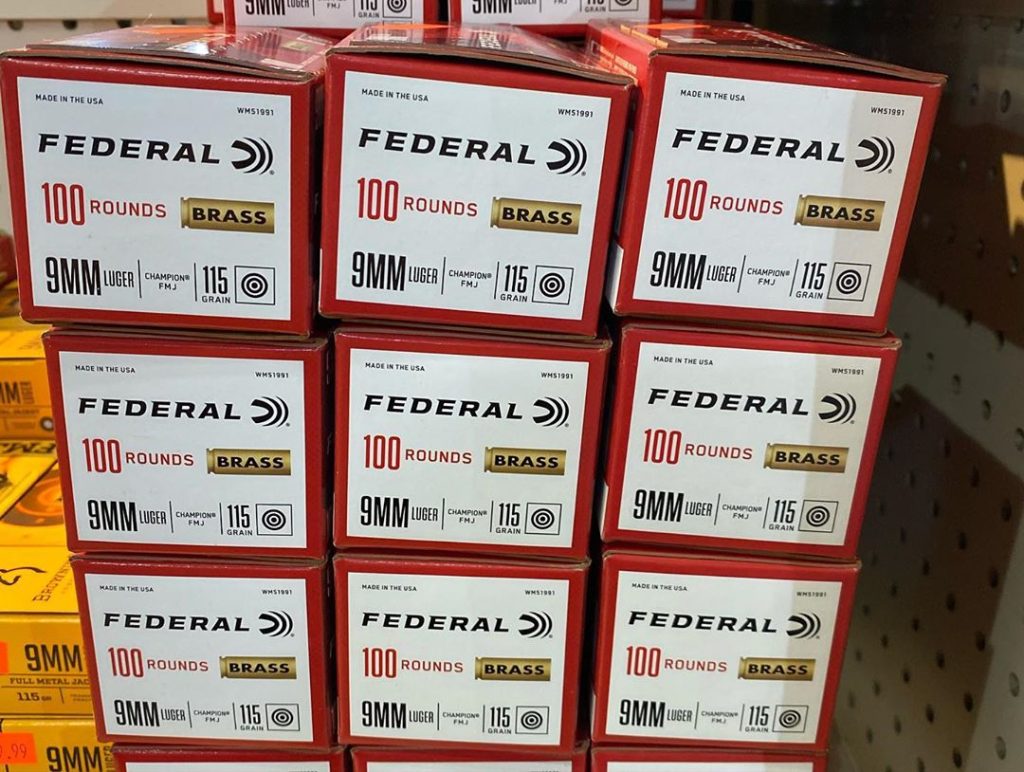
FMJ vs. JHP Ammo: Bulk Range & Self-Defense Buying Guide
When you’re loading up your cart for range practice or stocking up on defensive rounds, choosing between Full Metal Jacket (FMJ) and Jacketed Hollow Point (JHP) comes down to two simple factors: your goal downrange and your budget per round.
While both rounds share similar casings, powders, and primers, their bullet construction creates drastically different terminal performance. Loading the wrong round at the range wastes money, while loading the wrong round for daily carry compromises personal safety.
Here is the straightforward breakdown of how FMJ and JHP compare, how to match them for effective practice, and how to build a smart, cost-effective bulk inventory.
At a Glance: Practical Comparison
| Feature | Full Metal Jacket (FMJ) | Jacketed Hollow Point (JHP) |
| Primary Role | High-volume range practice, target drills, plinking | Self-defense, concealed carry, home protection |
| Bullet Construction | Solid lead core enclosed in a copper/metal alloy shell | Open cavity nose with pre-scored jacket walls |
| Impact Action | Holds shape; passes clean through paper/steel targets | Expands (“mushrooms”) rapidly upon fluid impact |
| Over-Penetration | Higher risk (retains velocity and shape) | Low to moderate risk (expands and dumps energy) |
| Feeding Profile | Rounded, slick nose for flawless feeding | Open-cavity profile; requires testing in your gun |
| Cost Profile | Budget-Friendly (Ideal for 500/1,000-round cases) | Premium (Sold in 20- or 50-round duty packs) |
Full Metal Jacket (FMJ): Built for High-Volume Shooting
FMJ rounds feature a solid lead core enveloped in a smooth copper or gilding metal jacket. Because the tip of the bullet is enclosed and rounded, it glides smoothly up the feed ramp of almost any semi-automatic handgun or rifle.
       FMJ (Solid Nose)               JHP (Hollow Cavity)
          /_______\                      /  \   /  \
         |         |                    |    \_/    |
         |  Lead   |                    |   Lead    |
         |  Core   |                    |   Core    |
         |_________|                    |___________|
        [Copper Jacket]                [Jacket + Cavity]
Why FMJ Is the Go-To Choice for Range Day:
-
Maximizes Your Shooting Budget: Simpler manufacturing means a significantly lower cost-per-round. Buying full 500- or 1,000-round cases lets you run drills, speed reloads, and tactical courses without overspending.
-
Flawless Mechanical Cycling: The slick, continuous jacket profile feeds reliably across tight custom chambers, vintage firearms, and stock polymer handguns alike.
-
Keeps Barrels Cleaner: The metal jacket shields the lead core from direct combustion heat, reducing lead residue inside your barrel rifling during long training sessions.
Jacketed Hollow Point (JHP): Built for Stopping Power
JHP rounds are engineered specifically for self-defense and duty use. The tip of the projectile features an open cavity surrounded by pre-cut serrations along the metal jacket.
When the bullet strikes a fluid-dense target at high velocity, hydrostatic pressure forces the hollow nose to mushroom outward, expanding up to double its original diameter.
Why JHP Is Essential for Personal Protection:
-
Immediate Energy Dump: As the bullet expands, it creates a significantly wider permanent wound channel and transfers its kinetic energy directly into the primary target.
-
Controls Over-Penetration Risk: The expanded “petals” act like a parachute in target tissue, rapidly slowing the projectile down. This prevents the round from exiting the target and endangering whatever lies beyond it.
The Pro Strategy: Matching Grain Weights for Training
A common pitfall for many shooters is practicing exclusively with cheap, lightweight FMJ (like 115gr 9mm) and loading heavy, high-pressure JHP (like 147gr +P) into their carry magazines without feeling the difference.
[ 124gr FMJ Range Round ] <--- Same Recoil & POI ---> [ 124gr JHP Carry Round ]
Why You Should Match Your Training & Carry Ammo:
When you fire thousands of rounds of light target ammo, your body adapts to a specific recoil rhythm, sight-recovery timing, and point of impact. Switching to heavy or higher-pressure defensive loads can cause:
-
Shifted Point of Impact (POI): Different grain weights strike higher or lower relative to your sight alignment.
-
Sharper Recoil Impulse: Higher pressure (+P) defensive rounds snap harder, throwing off follow-up shot timing if you haven’t trained for it.
The Fix: Find out the grain weight of your chosen defensive JHP (e.g., 124gr 9mm) and buy your bulk FMJ range cases in that exact same grain weight. You get the exact same recoil dynamics and sight placement at target-ammo prices.
How to Test Your Defensive Loadouts
Never carry untested ammunition. Even top-tier JHP rounds from premier manufacturers interact differently with individual magazine springs, feed ramp angles, and extractor tensions.
Rule of Thumb: Before trusting any JHP round for carry or home protection, fire at least 100 to 200 continuous rounds through your primary firearm and every carry magazine you own without a single failure to feed, extract, or eject.
How to Balance Your Ammunition Inventory
A practical, budget-smart ammo reserve follows a simple split:
-
80%–90% Bulk FMJ Target Ammo: Your primary supply for skill building, marksmanship maintenance, and range courses. Stocking up by the case lowers shipping costs and locks in lower cost-per-round rates.
-
10%–20% Premium JHP Duty Ammo: Reserved for carry magazines, home protection setups, and periodic rotation. Firing your carry rounds once a year and replacing them with fresh stock ensures your defensive setup stays 100% dependable.
Ready to gear up for your next trip to the range? Check out our latest inventory of in-stock bulk cases and secure top-tier factory rounds with fast, direct-to-door shipping!