
How Long Does Ammo Last? The Ultimate Guide to Ammo Shelf Life and Storage
Whether you are stocking up on target rounds for range day, building a long-term emergency supply reserve, or securing high-grade ammunition by the case, knowing how long your inventory will remain reliable is essential. Ammunition is an investment in both marksmanship development and personal protection. Understanding how to protect that investment ensures that every round you load will fire safely, consistently, and accurately when called upon.
The short answer? Factory-made ammunition stored properly in airtight ammo cans can easily last 30 to 50 years—or even longer—without losing velocity, terminal performance, or ignition reliability.
However, improper storage conditions—such as high humidity, extreme temperature swings, direct exposure to sunlight, or contact with penetrating oils—can degrade sensitive primer compounds and smokeless gunpowder in just a few short years.
In this comprehensive guide, we break down the science of ammo shelf life, the environmental factors that destroy gunpowder, how to visually inspect vintage or older stock, and the exact step-by-step process for storing bulk ammo in ammo cans to ensure 100% firing reliability for decades.
What Is the Actual Shelf Life of Ammunition?
When you inspect a box of factory ammunition, you may notice that most major manufacturers place a standard conservative shelf life of 10 years on their packaging or warranty documentation. This figure is primarily driven by corporate liability considerations, quality control assurances, and conservative environmental estimates rather than the hard physical limits of modern chemical compounds.
Modern smokeless powder (nitrocellulose or double-base nitrocellulose/nitroglycerin blends), non-corrosive primer compounds (lead styphnate), and solid metal casings (brass, nickel-plated brass, or coated steel) are remarkably stable. When isolated from ambient degradation factors, ammunition exhibits virtually zero chemical breakdown over half a century.
+-----------------------------------------------------------------------+
|                   AMMUNITION SHELF LIFE EXPECTANCY                    |
|                                                                       |
|  Ideal Conditions (Cool, Dry, Sealed Cans):   30 - 50+ Years           |
|  Sub-Optimal Conditions (Unsealed/Garages):   10 - 20 Years           |
|  Poor Conditions (High Moisture/Heat/Oils):    1 - 5 Years            |
+-----------------------------------------------------------------------+
Understanding Storage Environment Tiers
-
Ideal Conditions (Sealed, Climate-Controlled): Kept in airtight containers with desiccant at constant temperatures between 50°F and 70°F and relative humidity below 50%. Expect 30 to 50+ years of total operational life with zero measurable degradation in muzzle velocity, ignition speed, or grouping precision.
-
Sub-Optimal Conditions (Unsealed Ambient Spaces): Stored in original cardboard boxes inside residential closets, basements, or home offices without secondary sealing. Expect 10 to 20 years before minor surface tarnish or minor velocity variations develop due to seasonal humidity shifts.
-
Poor Conditions (Variable / High Moisture / Uncontrolled): Left in non-climate-controlled spaces like outdoor sheds, vehicle trunks, or damp basements exposed to high heat, freezing cycles, and humidity. Performance degrades rapidly within 1 to 5 years, frequently leading to hangfires, misfires, or complete failure to ignite.
If you are shooting factory non-corrosive ammunition produced within the last few decades, its lifespan is determined almost entirely by how and where you store it.
The Chemical Science Behind Ammo Aging
To understand why storage method matters so much, you must look at what happens inside a cartridge as it sits in inventory over time. A standard centerfire cartridge consists of four primary components: the metallic casing, the primer cup, the propellant (smokeless powder), and the projectile.
                  +--------------------------+
                  |    Projectile / Bullet   |
                  +--------------------------+
                  |  Casing (Brass / Steel)  |
                  |                          |
                  |   Smokeless Gunpowder    |
                  |        Propellant        |
                  |                          |
                  +--------------------------+
                  |   Primer Pocket & Anvil  |
                  +--------------------------+
1. The Smokeless Powder Propellant
Modern ammunition uses smokeless powder made of nitrocellulose (single-base) or a combination of nitrocellulose and nitroglycerin (double-base), stabilized with organic compounds like diphenylamine or ethyl centralite.
As gunpowder ages, these chemical stabilizers gradually absorb acidic byproducts generated by natural chemical decomposition. As long as stabilizers remain active inside the powder grain, the propellant burns at its specified rate. However, exposure to intense heat (above 90°F–100°F) speeds up chemical decomposition, consuming stabilizers prematurely and altering the burn rate of the powder.
2. The Primer Compound
The primer cup at the base of the cartridge contains an impact-sensitive chemical compound, primarily lead styphnate mixed with oxidizers and fuels. When the firing pin strikes the primer cup, the resulting shock wave crushes the compound against the internal anvil, creating a hot flash of flame that ignites the main powder charge.
Primer compounds are sensitive to liquid contamination. If liquid water, penetrating gun oils, or harsh chemical cleaning solvents seep around the edges of the primer cup, the moisture or chemical reaction neutralizes the primer mix, resulting in a dead round.
3. The Metallic Casing and Crimp
The brass or nickel-plated casing serves as an airtight pressure vessel holding the bullet and powder together. Over time, exposure to moisture causes oxygen and hydrogen to react with the copper content in brass, producing copper oxide and copper carbonate (verdigris). Heavy oxidation weakens the structural integrity of the brass neck, causing split cases or preventing the round from chambering smoothly.
The 4 Main Enemies of Ammunition
To keep bulk rounds firing cleanly for decades, you must actively protect your inventory against four main environmental destructive forces.
+-----------------------------------------------------------------------+
|                    THE 4 ENEMIES OF BULK AMMUNITION                   |
|                                                                       |
|   1. HIGH HUMIDITY ---------> Causes verdigris corrosion & dud powder  |
|   2. EXTREME HEAT ---------=> Speeds up powder chemical degradation   |
|   3. PENETRATING OILS ------> Neutralizes sensitive primer compounds  |
|   4. DIRECT UV LIGHT -------> Degrades plastic & generates radiant heat|
+-----------------------------------------------------------------------+
1. High Humidity and Moisture
Moisture is the primary cause of premature ammunition failure. High humidity levels (relative humidity above 65%) cause corrosion along the metallic surfaces of brass and steel casings.
Worse, moisture can creep past the bullet crimp or the primer pocket through capillary action. When moisture enters the main chamber, it clumps the smokeless powder grains together, preventing clean ignition. This can result in a squib load—a dangerous condition where the powder burns weakly, generating just enough pressure to push the bullet halfway down the barrel without exiting the muzzle.
2. Extreme Temperature Fluctuations
While cold temperatures rarely harm ammunition, sustained high heat accelerates chemical breakdown. Storing ammunition in attics, vehicle trunks, or metal sheds during summer months where ambient temperatures exceed 100°F causes the organic stabilizers in gunpowder to break down at up to four times their normal rate.
Furthermore, rapid shifts between hot days and cold nights create condensation inside unsealed containers. As air heats up, it holds moisture; as it cools rapidly at night, that moisture drops out of the air and settles directly onto cold metallic ammunition casings as liquid water droplets.
3. Exposure to Oils and Solvents
Penetrating gun oils, aerosol lubricants, bore solvents, and household chemical cleaners are engineered specifically to creep into microscopic cracks and displace moisture.
If ammunition is stored near open cans of cleaning solvents, sprayed with aerosol oils, or loaded into magazines heavily coated in wet gun lubricant, those liquids can migrate past the primer pocket seal over time. Once inside, the oil chemically neutralizes the primary explosive mix, leaving you with a dead click when you pull the trigger.
4. Direct Sunlight and UV Radiation
Direct sunlight subjects ammunition boxes to intense radiant heating, raising internal container temperatures well above the surrounding room air. Prolonged UV exposure also degrades plastic ammunition boxes, structural storage totes, and rubber sealing gaskets, causing airtight seals to dry out, crack, and fail over time.
How to Tell if Old Ammo Is Still Safe to Shoot
Before loading older or long-stored rounds into your magazines, perform a systematic visual, physical, and olfactory inspection. Knowing how to spot compromised rounds prevents firearm jams, damage, and potential safety hazards.
                  +-----------------------------------+
                  |   VISUAL INSPECTION PROTOCOL      |
                  +-----------------------------------+
                  | 1. Check Casing Surface Finish    |
                  | 2. Inspect Bullet Crimp Integrity |
                  | 3. Check Primer Cup Seat Depth    |
                  | 4. Smell Container for Acidic Odor|
                  +-----------------------------------+
Visual and Physical Inspection Guide
| Visual Indicator | Condition Status | Cause / Mechanical Impact | Action Required |
| Clean, bright brass or nickel | Excellent | Pristine, dry storage conditions | Safe to load and shoot |
| Dull tarnish / Light dark patina | Good | Mild, normal atmospheric exposure | Safe to load and shoot |
| Green crusty growth (Verdigris) | Compromised | Heavy moisture reacting with copper | Do not load; discard safely |
| Rust / Flaking on steel cases | Damaged | High humidity destroying protective coat | Do not load; discard safely |
| Dented, split, or loose bullet | Damaged | Physical shock or structural failure | Do not load; discard safely |
| Powder rattles cleanly inside | Good | Normal loose propellant grains | Safe to load and shoot |
| Pungent, acrid, or sour odor | Degraded | Powder breakdown releasing nitric gas | Do not load; discard safely |
The Smell Test: Detecting Degraded Gunpowder
Smokeless powder that has begun to break down chemically releases nitrogen dioxide gas, which has a distinct, sharp, acrid, or vinegary smell. When opening a sealed box or can of older ammunition, take a quick sniff. If you detect a strong, pungent chemical odor instead of a mild metallic smell, or if you notice reddish-brown dust inside the box, the powder has broken down. Do not fire these rounds.
CRITICAL SAFETY WARNING: SQUIB LOADS
If an older round fires with an unusually quiet “pop” sound or yields significantly less recoil than normal, STOP SHOOTING IMMEDIATELY. Keep the muzzle pointed downrange for at least 30 seconds, then safely unload the firearm and visually inspect the bore. A squib load occurs when the primer fires but the powder burns weakly, leaving the bullet lodged inside the barrel. Firing a second round behind a lodged bullet will rupture the barrel, destroying the firearm and risking severe injury.
Storing Bulk Ammo in Ammo Cans: Step-by-Step
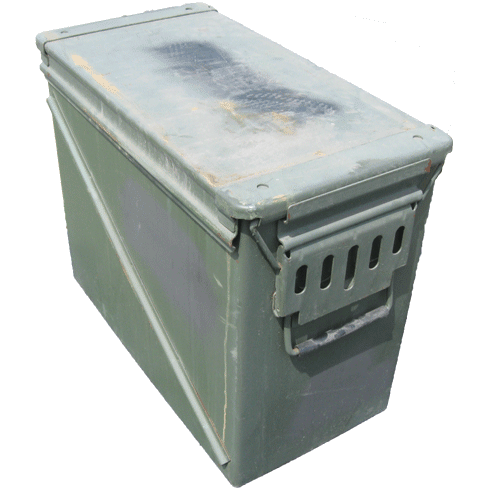
Using heavy-duty metal or polymer ammo cans is the industry standard for protecting bulk target and defensive ammunition against ambient air, humidity, physical shock, and pests. Follow this step-by-step process to set up a long-term storage system capable of preserving rounds for decades.
+-----------------------------------------------------------------------+
|              5-STEP BULK AMMO CAN STORAGE SYSTEM                      |
|                                                                       |
|  Step 1: Choose Heavy-Duty Steel or High-Grade Polymer Cans           |
|  Step 2: Inspect & Condition the Rubber Perimeter Gasket              |
|  Step 3: Pack Ammunition in Original Factory Boxes or Organizers      |
|  Step 4: Insert Rechargeable Silica Gel Desiccant Packs               |
|  Step 5: Latch Firmly, Label Specs/Dates, & Elevate Off Concrete      |
+-----------------------------------------------------------------------+
Step 1: Choose the Right Storage Containers
Selecting the right container provides the physical barrier necessary to keep environmental threats away from your ammunition inventory.
-
Metal Military Surplus Cans (M2A1 .50 Cal or PA108 FAT 50): Steel military surplus or new-production steel ammo cans are the gold standard. Constructed from heavy-gauge steel with a heavy-duty latching mechanism, they provide superior structural strength, EMI shielding, and fire resistance. They allow you to stack heavy bulk cases without crushing the lower cans.
-
Heavy-Duty Polymer Ammo Cans: Modern high-density polymer cans are lightweight, completely rustproof, and resistant to denting. When choosing polymer, verify that the lid features a thick rubber gasket and heavy latching arm, rather than a simple snap-lid design.
Step 2: Inspect and Condition the Rubber Gasket Seal
The protective capability of an ammo can relies entirely on the rubber or silicone gasket recessed inside the perimeter rim of the lid.
-
Open the lid and inspect the rubber seal for dry rot, cracks, flattening, or dirt accumulation.
-
Clean any grit or cardboard dust out of the seal channel using a dry cloth.
-
If the gasket is dry, apply a paper-thin coat of 100% pure silicone grease to keep the rubber soft, pliable, and airtight when latched shut.
Step 3: Keep Ammo in Original Factory Boxes
While it can be tempting to dump thousands of loose rounds directly into a metal ammo can to maximize internal space, keeping ammunition inside its original cardboard boxes or plastic divider trays offers distinct advantages:
-
Protects Primer Caps: Factory packaging prevents bullet tips from striking adjacent primer cups during transport or handling.
-
Preserves Lot Numbers and Manufacturing Dates: Factory boxes feature stamped lot numbers. If a manufacturer issues a product safety recall on a specific batch of powder or primers years down the road, you can easily identify affected rounds.
-
Provides a Secondary Humidity Buffer: Cardboard boxes and divider trays absorb minor physical shocks and act as a secondary buffer against brief air exposure when the can is opened.
      +----------------------------------------------------+
      |  [Factory Box]  [Factory Box]  [Factory Box]       |
      |  [Factory Box]  [Factory Box]  [Factory Box]       |
      |  ===========================================       |
      |  [  Silica Gel Pack  ]   [  Silica Gel Pack  ]     |
      |  ===========================================       |
      |  [Steel Ammo Can - Sealed Rubber Gasket Latch]     |
      +----------------------------------------------------+
Step 4: Add Silica Gel Desiccant Packs
Even when latched tightly in a dry room, a small amount of humid air gets trapped inside the ammo can the moment you seal the lid. Adding desiccant packs pulls this residual moisture out of the air, keeping the internal relative humidity near zero.
-
Desiccant Ratio: Use approximately 5 to 10 grams of silica gel per 100 rounds of handgun ammo, or roughly 30 to 50 grams for a standard .50 caliber ammo can.
-
Use Color-Indicating Desiccant: Select rechargeable desiccant packs that change color (e.g., from orange to green or blue to pink) when saturated.
-
How to Recharge Desiccant: When the desiccant changes color, bake the packs on a baking sheet in a conventional oven at 240°F (115°C) for 2 to 3 hours to drive off trapped moisture, returning them to pristine condition.
Step 5: Seal, Label, and Elevate Off the Floor
Close the heavy lever-latch on the ammo can to compress the rubber gasket flat against the steel rim, forming a complete seal.
-
Label the Outside Clearly: Use painter’s tape, paint pens, or adhesive vinyl labels on the front and top of the can. List the caliber, bullet grain weight, bullet type (FMJ/JHP), manufacturer, purchase date, and total round count.
-
Elevate Off Concrete Floors: Never stack ammo cans directly on raw concrete basement or garage floors. Concrete continuously absorbs ground moisture and transfers cold temperatures, encouraging condensation inside the bottom of the lower cans. Place your cans on heavy-duty steel shelving units, wooden pallets, or rubber mats.
Advanced Storage Environments Compared
Where you place your sealed ammo cans within your home or property directly impacts how long the seals and contents remain pristine.
+-----------------------------------------------------------------------+
|                  STORAGE LOCATION RATING GUIDE                        |
|                                                                       |
|  1. CLIMATE-CONTROLLED CLOSET / VAULT ROOM ---> OPTIMAL (5/5 Stars)   |
|  2. FINISHED BASEMENT (ELEVATED SHELVING) ----> EXCELLENT (4/5 Stars) |
|  3. UNFINISHED BASEMENT / CRAWLSPACE ---------> POOR (2/5 Stars)      |
|  4. UNINSULATED GARAGE / OUTDOOR SHED --------> HIGH RISK (1/5 Stars) |
|  5. VEHICLE TRUNK / GLOVE BOX ----------------> HIGH RISK (1/5 Stars) |
+-----------------------------------------------------------------------+
1. Climate-Controlled Closet or Dedicated Vault Room (Best Choice)
-
Rating: 5 / 5 Stars
-
Environment: Maintained at standard residential interior temperatures (65°F–72°F) with central air conditioning controlling relative humidity year-round.
-
Result: Zero temperature stress; seals and powder remain stable for 50+ years.
2. Finished Basement on Elevated Shelving (Excellent Choice)
-
Rating: 4 / 5 Stars
-
Environment: Cool temperatures year-round (55°F–65°F). Relative humidity can fluctuate seasonally, requiring a dehumidifier running nearby.
-
Result: Excellent long-term longevity, provided containers are kept off the concrete slab and equipped with silica desiccant.
3. Uninsulated Garage, Shed, or Attic (High-Risk Environment)
-
Rating: 1 / 5 Stars
-
Environment: Subject to summer heat waves (100°F+), winter freezes, and severe humidity swings that cause daily condensation cycles.
-
Result: Accelerated rubber seal failure, rapid outer container rusting, and reduced powder lifespan (5 to 10 years max).
4. Vehicle Trunks and Emergency Gear Kits (Special Case)
-
Rating: 2 / 5 Stars
-
Environment: Vehicle interiors act as greenhouses, reaching temperatures above 130°F in summer months.
-
Result: Keep vehicle emergency ammunition supplies small. Rotate emergency trunk magazines and ammo boxes every 12 to 24 months to ensure fresh, reliable rounds.
Frequently Asked Questions About Ammo Storage
Can you store ammo in plastic Tupperware or standard storage totes?
Standard household food containers or clear plastic storage totes are not recommended for long-term ammo storage. They lack the structural strength to hold heavy bulk ammunition cases without flexing, and their lids do not feature compressed rubber perimeter gaskets. Moisture and ambient air slowly diffuse through standard plastics over time. Stick to heavy-duty polymer or steel ammo cans engineered with rubber seals.
Should you oil or wax individual ammo casings before storing them?
No. Never apply oils, motor lubricants, liquid car waxes, or liquid rust inhibitors directly to ammunition casings. Liquid oils and solvents can creep past the bullet mouth crimp or primer pocket over time, soaking into the powder charge and neutralizing the primer compound. Keep all ammunition clean, dry, and free of oil coatings.
Does steel-cased ammo last as long as brass-cased ammo?
If stored inside sealed ammo cans with silica desiccant, high-quality steel-cased ammunition (featuring polymer or lacquer coatings) will last just as long as brass-cased ammunition. However, if exposed to open atmospheric humidity, steel casings lack the natural corrosion resistance of copper-based brass alloys and will rust rapidly once the protective outer polymer layer is scratched.
Is vacuum-sealing ammo in plastic bags a good idea?
Vacuum-sealing cardboard boxes of ammunition in heavy-duty food saver bags is an effective secondary moisture barrier. However, always ensure sharp cardboard corners or metal bullet tips do not puncture the thin plastic bag. Combine vacuum-sealed boxes inside a rigid steel ammo can for maximum protection against physical crushing, floods, and humidity.
Summary Checklist for Decades of Reliable Storage
To ensure your target practice cases, defensive reserves, and bulk ammunition stocks maintain 100% firing reliability for 30 to 50+ years, follow this final operational summary:
-
Maintain Cool, Stable Temperatures: Store containers in a climate-controlled room between 50°F and 70°F whenever possible. Avoid high-heat attics or uninsulated garages.
-
Invest in Quality Ammo Cans: Use heavy-gauge steel military surplus or heavy-duty polymer ammo cans built with thick, uncracked rubber sealing gaskets.
-
Use Silica Gel Desiccant: Add 30 to 50 grams of color-indicating silica gel desiccant inside every closed ammo can to eliminate trapped air moisture.
-
Keep Factory Packaging Intact: Store rounds in their original divider boxes to protect primer cups, prevent bullet setback, and retain lot numbers.
-
Elevate Storage Off Floors: Place ammo cans on steel shelving units or wooden pallets off concrete slabs to block ground moisture transfer.
-
Label Everything: Clear labels with caliber, grain weight, brand, and date stored ensure clean inventory rotation and zero confusion down the road.
By controlling humidity, temperature, and atmospheric exposure, you can preserve your bulk ammunition inventory indefinitely—keeping every round clean, safe, and ready when you hit the range or load your magazines.