
How to Store Bulk Ammo Long-Term: The Definitive Climate and Container Guide
Purchasing training ammunition in large volume is an exceptional strategy to bypass retail markups. Buying in bulk also protects your personal shooting assets from sudden market shortages. Furthermore, volume buying ensures your weekly training routine remains uninterrupted. However, securing a major freight shipment of centerfire pistol cartridges or rifle packages is only the initial phase of a successful inventory pipeline and Store Bulk Ammo Long-Term
If you do not actively preserve those investments using correct guidelines, environmental degradation can ruin your financial investment. Consequently, dampness can compromise primer sensitivity and create safety hazards inside your firearms during cycling. For this reason, mastering the exact science of how to store bulk ammo long-term is an essential asset for competitive sport shooters, tactical operators, and defensive-minded citizens alike.
Why Long-Term Ammunition Care Matters Today
The internal chemical composition of modern centerfire and rimfire ammunition configurations is remarkably stable under standard conditions. Nevertheless, it remains highly susceptible to specific environmental catalysts over extended durations. For example, internal gunpowder propellants and modern non-corrosive primer compounds are engineered to undergo rapid combustion reactions upon precise mechanical firing pin impact.
Unfortunately, prolonged exposure to shifting thermal bands, unmitigated atmospheric moisture levels, and volatile chemical vapors can slowly degrade these sensitive mixtures over time. Therefore, by implementing a strict, clinically sound storage protocol inside your residential vault, you can preserve the structural integrity and ballistic predictability of your ammunition for decades.
This comprehensive guide breaks down the core structural variables of bulk ammunition preservation. Specifically, we will analyze the physics of moisture damage, the mechanics of thermal breakdown, the structural advantages of specialized storage containers, and practical inventory management workflows. As a result of organizing your storage space around these professional-grade principles, you can confidently protect every single round in your inventory.
The Core Threats to a Strategy to Store Bulk Ammo Long-Term
Before selecting specific storage hardware or modifying your residential floor plan, you must understand the exact physical enemies of loaded ammunition. In commercial manufacturing environments, factory engineers utilize highly specific environmental testing chambers to simulate accelerated structural aging. These laboratory tests reveal that ammunition performance degradation is almost always driven by three distinct environmental elements.
Atmospheric Moisture and Metallic Oxidization
Moisture is the single most destructive variable your inventory faces during long-term storage campaigns. Water vapor suspended in ambient room air acts as an active catalyst for galvanic corrosion and rapid oxidation when allowed to settle onto raw metallic surfaces. Generally, a standard modern cartridge consists of several completely dissimilar metals pressed into close physical contact. These include a copper-alloy jacket, a solid lead projectile, a cartridge casing made of brass, steel, or aluminum, and a primer cup containing a specialized strike compound.
When relative humidity spikes across your storage room, moisture forms a microscopic conductive bridge between these different metals. This process kicks off slow chemical corrosion. On brass casings, high moisture creates a dull green or chalky white tarnish known as cupric oxide. While light surface tarnish can often be safely wiped away with cloth, deep corrosion structurally weakens the casing walls. Consequently, the metal can thin out over time and risk cracking under high pressure.
Similarly, on steel casings, moisture causes rapid iron oxidation, leading to rough red rust. This rust completely alters the exterior dimensions of the cartridge case. As a result, it creates severe chamber friction and catastrophic extraction failures inside your firearm. Finally, if moisture successfully breaches the small seam around the primer pocket or the crimped mouth of the case, it can directly compromise the internal priming compound. This dampness leads to click-and-fail hangfires or completely inert duds at the range.
Thermal Breakdown and Chemical Degradation
High heat does not typically cause stored ammunition to spontaneously detonate on shelves. However, it actively alters the burn rates of modern smokeless powders over multi-year timelines. Modern gunpowder consists of nitrocellulose base compounds combined with specialized chemical stabilizers, plasticizers, and burn-rate modifiers. These complex stabilizers prevent the natural, slow breakdown of nitrocellulose over time.
When ammunition is subjected to high ambient heat, these built-in chemical stabilizers break down at an accelerated rate. Once the stabilizers are depleted, the smokeless powder begins a slow process of self-heating and decomposition. This breakdown releases acidic gases that attack the internal walls of the brass casing. Therefore, this internal decay can cause erratic pressure spikes upon ignition, resulting in poor shot-to-shot accuracy or dangerous chamber over-pressure situations.
Volatile Chemical Vapors and Solvents
Many gun owners store their bulk ammunition boxes on the exact same shelves or workbenches where they maintain their firearms. Unfortunately, this layout introduces a hidden hazard: airborne chemical exposure. Volatile organic compounds found in aggressive bore solvents, ammonia-based cleaners, penetrating oils, and spray lubricants can migrate through the air or seep past loose container lids.
Ammonia is incredibly destructive to copper-zinc alloys like cartridge brass. Specifically, airborne ammonia vapor causes a chemical reaction called stress corrosion cracking. This microscopic degradation causes the neck and shoulder areas of your brass casings to become brittle and split open spontaneously under storage tension. Consequently, keeping your raw ammunition structurally isolated from active cleaning chemicals is critical to long-term safety.
Temperature Metrics: How to Store Bulk Ammo Long-Term in Fixed Thermal Bands
Controlling the thermal environment of your storage vault is a primary requirement for long-term ammunition preservation. While modern military-spec cartridges are engineered to survive short-term deployments in harsh climates, long-term civilian storage demands a more stable, moderated environment if you want to store bulk ammo long-term without losing performance.
The Ideal Structural Target
The optimal temperature range for storing commercial and military surplus ammunition is 10°C to 21°C (50°F to 70°F). This specific band keeps chemical reactions slow, preserving internal powder stabilizers for decades. As a rule of thumb used by professional ammunition archivists, for every 10°C (18°F) increase above room temperature, the degradation rate of internal stabilizers roughly doubles.
The Real Threat: Thermal Cycling
While maintaining a continuous temperature of 29°C (85°F) is not ideal, it is significantly less damaging than wide temperature swings. Thermal cycling occurs when storage zones heat up during the day and cool down rapidly at night. This expansion and contraction cycle causes several mechanical issues.
First, the expanding air creates internal pressure changes. As the air inside an ammunition box heats up, it expands and pushes outward against container seals. When the temperature drops, the internal air contracts, creating a vacuum that pulls external, moisture-laden air inside. Second, rapid temperature drops can push the air inside a container past its dew point. This drop causes hidden, airborne moisture to condense into water droplets directly on your raw brass and primers.
Areas to Avoid Completely
To prevent premature thermal degradation, you must scratch several common residential areas off your list of potential storage locations. Uninsulated garages and tool sheds act like greenhouses in the summer, with temperatures regularly crossing 43°C (110°F). These intense heat levels can destroy a bullet’s long-term shelf life in just a few seasons.
Vehicle trunks and truck toolboxes are equally dangerous. For example, the enclosed trunk of a vehicle parked in the sun can reach temperatures above 60°C (140°F). This intense heat can melt external projectile waxes or cause bullet lubricants to bleed back into the powder charge. Finally, avoid attics and ceiling crawlspaces, as rising household heat collects in unconditioned attic spaces, making them highly unstable environments for sensitive primers.
Humidity Metrics: Controlling Atmospheric Water Vapor to Store Bulk Ammo Long-Term
If temperature controls the speed of chemical decay, humidity controls the speed of physical corrosion. Therefore, managing relative humidity is your single most important defense against tarnish, rust, and misfires when preparing to store bulk ammo long-term.
The Target Humidity Level
For safe, multi-decade ammunition storage, you must maintain a relative humidity level below 50%. The ideal target is between 30% and 40%. Keeping your storage space within this dry band ensures there is not enough moisture in the air to cause galvanic corrosion between dissimilar metals, keeping your brass cases bright and clean.
While dry air is generally your friend, dropping your relative humidity below 20% for extended periods can cause minor issues with specific types of historical or specialized ammunition. For instance, extremely dry environments can dry out card stock over-powder wads in vintage shotshells or shrink paper patches on historical black powder rounds. For modern centerfire ammunition, however, low humidity poses virtually zero risk.
Combating Moisture with Desiccants
Since opening and closing your storage containers introduces fresh air, you need an active system to capture moisture inside your boxes. This is where specialized desiccant packs come into play. Silica gel packs are common synthetic pouches containing highly porous silicon dioxide, which physically traps water molecules from the air. They are incredibly efficient for small, enclosed spaces like individual 30-caliber or 50-caliber ammo cans.
Alternatively, bentonite clay desiccants, made from natural, highly absorbent volcanic clay, offer an incredibly cost-effective option for large gun safes, storage lockers, and secure vault rooms. To determine exactly how much desiccant your inventory requires, use standard industrial preservation formulas.
For airtight storage environments, a reliable baseline is to use 5 to 7 grams of active silica gel per cubic foot of interior container space. A small M19A1 .30-caliber can requires at least a 5-gram pouch, while a standard .50-caliber can benefits from a 10-gram pouch. Larger fat .50-caliber cans should use a 20-gram pouch. For full-sized residential safes or large executive vaults, rechargeable dehumidifier units or larger desiccant boxes ranging from 150 to 300 grams should be utilized to maintain safety parameters.
Monitoring Your Inventory
Never guess the state of your climate control. Instead, use simple tools like color-changing indicator cards or digital hygrometers to keep tabs on your storage conditions. Color-changing indicator cards can be dropped right into your ammo cans. The indicator spots turn from blue to pink as humidity rises, warning you exactly when it’s time to replace or dry out your desiccant packs.
Placing a digital hygrometer inside your main safe or storage closet gives you an instant readout of your temperature and humidity levels. Many modern models feature wireless connectivity, allowing you to monitor your vault’s environment from a central display.
Container Mechanics: Best Choices to Store Bulk Ammo Long-Term
Your outermost layer of defense is the container you select to hold your bulk ammunition. The ideal container must provide physical support for heavy lead inventory while acting as a barrier against outside air and moisture to ensure you successfully store bulk ammo long-term.
Military-Spec Steel Ammunition Cans
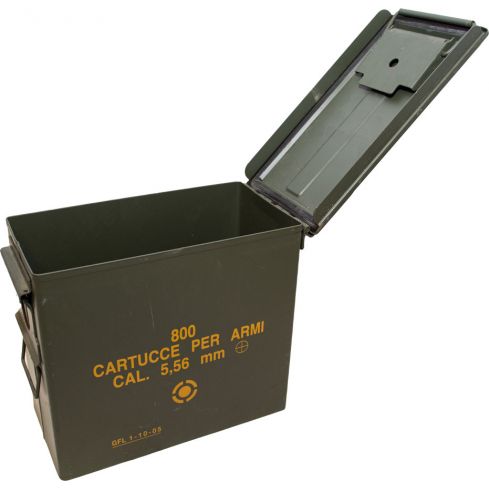
Mil-spec steel cans remain the absolute gold standard for long-term ammunition preservation. These heavy-duty boxes are stamped from durable carbon steel and feature a robust, mechanical lever-lock latch system. The secret to their incredible performance is the padded rubber gasket running along the inside of the lid.
When you clamp the latch shut, it compresses the rubber gasket against the rim of the can, creating an airtight and watertight seal. This seal locks your dry micro-climate inside and keeps changing room air out. Furthermore, their sturdy steel construction prevents them from crushing or bowing when you stack them several layers deep.
Commercial Plastic Ammunition Boxes
Molded polymer ammo cans offer a lightweight, budget-friendly alternative to traditional steel boxes. High-quality plastic options from respected brands feature a continuous rubber O-ring seal inside the lid, giving them great moisture resistance. However, polymer options have a structural limitation when it comes to volume storage.
Heavy bulk cases of lead ammunition place immense pressure on container bases. Over time, heavy loads can cause plastic lids and handles to flex or warp slightly. This warping can break the internal O-ring contact, compromising the airtight seal. As a result, plastic containers are best used for lighter rimfire ammo or smaller, short-term batches rather than massive, multi-decade stacking.
Factory Cardboard Boxes and Loose Storage
When you buy ammunition by the case, it arrives packed in individual cardboard boxes inside a larger master crate. While cardboard is convenient for organization, it poses a hidden risk for long-term storage. Cardboard is highly porous and acts like a sponge, absorbing moisture from the surrounding air and holding it right against your ammunition.
For true multi-decade storage, the smartest strategy is to remove the cardboard boxes entirely. Transferring your cartridges loosely into a sealed steel ammo can with a desiccant pack eliminates this moisture trap, saves considerable storage space, and allows you to fit significantly more rounds into a single container.
Step-by-Step Guide to Packing Ammunition for Decades of Storage
Preserving bulk ammunition requires a structured, step-by-step approach. Follow this professional processing workflow to ensure your inventory remains in pristine, match-ready condition for decades to come.
Inspecting Hardware and Seals
Before placing a single round into a container, inspect the container itself. Run a clean cloth along the inside to remove any manufacturing oils, dirt, or dust. Next, pay close attention to the rubber gasket lining the inside of the lid. Ensure the rubber is soft, flexible, and completely free of deep cracks, dry rot, or flat spots. Applying a light coat of pure silicone grease to the rubber will keep the gasket pliable and maintain a perfect seal.
Removing Porous Packaging Materials
Open your bulk master shipping crate and take out the individual boxes. If you prefer to keep your ammunition organized in factory boxes for fast counting, ensure your outer container has extra desiccant to offset the moisture trapped in the cardboard. For maximum preservation and storage density, open the boxes and carefully transfer the loose cartridges directly into your clean ammo can.
Layering the Bulk Inventory
To fit the maximum number of rounds into a standard steel can, lay the cartridges in clean, interlocking rows. If you are packing rifle cartridges with exposed lead tips or soft-point bullets, place a sheet of clean, acid-free kraft paper between the vertical layers. This simple layer cushions the projectiles and prevents the heavy cartridges from compressing or deforming the rounds underneath.
Placing the Desiccant Pack Correctly
Once your can is filled to roughly 90% capacity, place a fresh, active silica gel pack right on top of the ammunition. Avoid dropping the desiccant pack directly onto the bottom of the can before loading. Since moisture can find its way past the top lid gasket over time, placing the desiccant pack at the top ensures it catches any incoming moisture immediately.
Locking and Labeling the Container
Close the lid firmly and push the mechanical lever-lock latch down until it snaps securely into place. You should feel a clear, firm resistance as the latch compresses the internal rubber gasket against the steel rim. Once sealed, use a permanent marker or a label maker to clearly mark the exterior of the can. Include the exact caliber, bullet weight, brand name, factory lot numbers, and the date you sealed the container.
Strategic Inventory Management to Store Bulk Ammo Long-Term
Managing a large ammunition inventory requires clean organization and clear documentation. Without a structured tracking system, your storage area can quickly become a chaotic mess, leading to wasted training hours and forgotten supplies.
Implementing a FIFO Rotation System
To keep your ammunition fresh, always use a First-In, First-Out rotation strategy. The oldest ammunition in your vault should always be the first ammo you grab for range sessions, tactical courses, or competitive matches. When adding fresh cases of ammunition to your inventory, avoid stacking them directly on top of older boxes. Take the time to rearrange your shelves, placing your newest purchases at the back or bottom and moving your older lots to the front for easy access.
Creating a Detailed Master Digital Log
Do not rely on your memory to track your ammunition reserves if you plan to store bulk ammo long-term. Instead, create a digital spreadsheet or use a dedicated inventory app to build a comprehensive master log. Update this file every single time you buy new supplies or use rounds at the range.
Your master log should include the exact storage date, the manufacturer and product line, the caliber and bullet specifications, the factory lot numbers for safety recall tracking, and the specific storage location inside your vault room.
Ballistic Science: Casing Materials Under Storage Stress
The exact metal composition of your ammunition cartridge cases alters how it reacts to prolonged climate storage. Each metallurgy configuration possesses a unique baseline resistance value to structural degradation under environmental stress.
Premium Reloadable Brass
Cartridge brass is an alloy primarily composed of copper and zinc. It offers excellent natural resistance to structural degradation, and its elastic memory ensures it expands uniformly to seal the chamber when fired. Under high humidity, brass develops a dull, dark brown patina. While this patina is purely cosmetic and entirely safe to shoot, prolonged water exposure can eventually trigger zinc depletion, leaving the metal weak and brittle.
Economical Steel Casings
Steel ammunition offers exceptional upfront cost benefits but has the lowest natural resistance to atmospheric moisture. To protect raw iron lines from atmospheric oxidation, factories coat steel cases with thin layers of lacquer, polymer, or zinc. However, if these thin protective coatings are scratched or scraped during transport, humidity can rapidly attack the exposed steel underneath, producing aggressive red rust that compromises firearm operation.
Lightweight Single-Use Aluminum
Aluminum cases offer a middle ground between brass and steel performance metrics. Aluminum naturally forms an incredibly thin, invisible oxide barrier when exposed to oxygen, which prevents deep rust from setting in. This characteristic makes aluminum highly stable in humid environments. The main trade-off is that aluminum lacks the elastic properties of brass, making it unsuitable for reloaders who want to recycle spent casings.
Troubleshooting and Restoring Inventory You Store Bulk Ammo Long-Term
Even with careful planning, things can go wrong. If your storage space suffers a sudden plumbing leak, a climate control failure, or an extended power outage, you need to know how to spot and handle compromised ammunition safely.
How to Evaluate Surface Corrosion
If you open an older container and find discoloration on your cartridges, examine the metal closely to assess the damage. Light natural tarnish means the brass looks dull, dark, or shows a slight brown color but remains smooth to the touch; it is completely safe to use. This is simple, cosmetic surface oxidation that will not affect reliability.
Superficial green verdigris appears as small spots of crusty green or white powder. Wipe the cartridges down firmly with a coarse microfiber cloth. If the powder comes off completely and leaves smooth metal underneath, the ammunition is safe for immediate use at the range.
Deep pitting and scaling mean the corrosion has eaten into the metal, creating rough craters or flaking layers. The structural strength of the casing has been compromised, and thin, brittle metal can split wide open during firing. Do not attempt to shoot pitted ammunition; dispose of it safely.
Recharging Saturated Silica Gel Packs
One of the best benefits of premium silica gel desiccant packs is that they are fully reusable. When your moisture indicators show that a pack is saturated, you don’t need to throw it away. You can easily recharge it using a standard kitchen oven.
Spread the saturated silica gel packs evenly across a clean, ungreased baking sheet and preheat your oven to 115°C (240°F). Avoid raising the temperature any higher, as excessive heat can melt the porous fabric casing holding the gel beads. Bake the packs for 2 to 3 hours to drive the trapped moisture out.
Remove the hot packs from the oven and place them immediately inside an airtight glass jar or a heavy-duty zip-top bag to cool. Consequently, they will not draw moisture out of the room air as they cool down.
Long-Term Defensive Ammunition Special Considerations
While bulk practice rounds can be processed and managed easily using standard loose volume methods, premium defensive ammunition requires an extra level of care. If you are tracking premium hollow-point cartridges or duty-grade loads, pay close attention to these factory assembly details to safely store bulk ammo long-term.
Advanced Shellac Primer Seals
Many high-grade defensive and military-spec cartridges feature a visible ring of colored shellac or polymer sealant around the primer pocket and case mouth. This specialized barrier is applied at the factory to block moisture and oil from seeping into the sensitive internal powder charge. While this extra seal makes the ammunition highly resilient against short-term moisture exposure, it does not mean you should skip standard climate-controlled storage protocols for your long-term reserves.
Managing Carry Rotation Schedules
Ammunition loaded into magazines and carried daily inside defense handguns is exposed to extreme conditions every day. It faces rapid temperature changes, airborne body sweat, rain, dust, and continuous mechanical movement. Over time, these factors can slowly degrade even the highest-quality defensive rounds.
To ensure absolute reliability when it matters most, implement a strict defensive carry rotation schedule. Swap out your carry ammunition for fresh rounds every 6 to 12 months. Don’t let your old carry rounds go to waste; use them during your next range training session to practice with your actual defensive setup, then fill your magazines with fresh cartridges from your climate-controlled long-term vault.
Summary Checklist for Multi-Decade Preservation
To ensure your bulk ammunition remains in pristine condition for decades, use this quick summary checklist for your vault room:
-
Keep ambient temperatures stable between 10°C and 21°C (50°F to 70°F), avoiding rapid temperature swings.
-
Maintain a relative humidity level below 50%, with an ideal target between 30% and 40%.
-
Add a minimum of 5 to 7 grams of active silica gel per cubic foot of container space.
-
Choose military-spec steel containers with a soft, functional rubber lid gasket.
-
Remove porous factory cardboard boxes to maximize storage space and eliminate hidden moisture traps.
-
Store all ammunition completely away from volatile gun cleaning solvents, ammonia products, and spray lubricants.
-
Use a strict First-In, First-Out rotation strategy to ensure older ammunition lot numbers are used first.
Secure Your Logistics Infrastructure
Preserving your ammunition reserves requires a careful balance of climate control, sturdy hardware, and smart organization. By investing a small amount of time into proper packing and environmental tracking, you can protect your financial investment and ensure your rounds deliver reliable, match-grade performance decades down the road.
Explore our massive selection of supplies at BulkAmmoSupplyUSA to discover incredible deals on high-volume bulk ammo deals and premium handgun ammo. We specialize in fast, secure logistics and unparalleled customer support to ensure your shooting gear arrives quickly and safely. Head over to our best-selling ammunition products page today to secure your volume pricing and stock up your vault before the next market shift!
Legal and Safety Disclaimer
BulkAmmoSupplyUSA sells ammunition only in accordance with applicable federal, state, and local laws. Buyers are responsible for understanding and complying with all regulations in their jurisdiction. Always handle and store ammunition safely.