
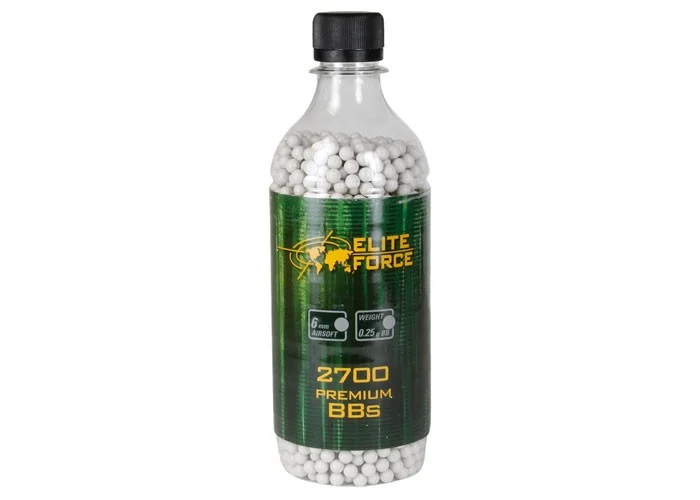
Airsoft BBs Weight and Accuracy Guide: The Tactical Performance Blueprint
Before You Choose Airsoft BBs Weight and Accuracy: Understand This First
When preparing your loadout for force-on-force training, high-stakes military simulation (MilSim), or competitive field deployment, ammunition selection is never a secondary thought. It represents the definitive, mechanical link between your platform’s internal engineering and real-world target interdiction. Navigating this critical choice requires a deeply technical airsoft bbs weight and accuracy guide rather than relying on guesswork or promotional packaging claims. To achieve repeatable downrange success, an operator must balance the uncompromising laws of physics, fluid dynamics, and kinetic energy transfer.
Many developing shooters look exclusively at muzzle velocity, measured in feet per second (FPS), as the sole metric of power, range, and operational efficacy. Consequently, this narrow focus leads to severe field performance degradation when engagement distances stretch past baseline minimums. A lighter spherical projectile will always exit the inner barrel rapidly, yet it will shed its initial velocity almost immediately upon encountering atmospheric resistance.
To achieve true, repeatable accuracy under pressure, you must thoroughly understand the relationship between the mass of the projectile and the efficiency of your platform’s hop-up assembly. The hop-up bucking applies a precise backspin to the BB as it passes through the chamber, creating a critical pressure differential known fundamentally as the Magnus effect. This upward lift counteracts the constant pull of gravity, allowing for a remarkably flat trajectory over extended distances.
[High Velocity / Low Mass]  ---> Rapid Velocity Decay ---> Erratic Flight Path
[Stable Velocity / High Mass] ---> Sustained Kinetic Energy -> Flat Trajectory
Therefore, before making a bulk purchasing decision or stockpiling inventory for an upcoming deployment, you must comprehensively evaluate your platform’s specific mechanical configuration. This evaluation includes analyzing your cylinder-to-barrel volume balancing, your hop-up bucking hardness, and the structural integrity of your magazine feeding system. Utilizing a definitive, performance-driven airsoft bbs weight and accuracy guide ensures that the kinetic energy generated by your compression system is efficiently retained downrange, rather than wasted at the muzzle.
What Most Shooters Get Wrong About an Airsoft BBs Weight and Accuracy Guide
The Dangerous Myth of High Muzzle Velocity over Heavy BB Precision
The most prevalent, persistent misconception among developing marksmen is that higher muzzle velocity automatically equates to superior range and precision. Specifically, shooters often purchase lightweight 0.20g or 0.23g ammunition solely to maximize the raw numbers displayed on a chronograph during staging.
[0.20g BB] ---> High Initial FPS ---> Rapid Velocity Decay ---> Extreme Wind Drift
[0.28g BB] ---> Lower Initial FPS --> Sustained Kinetic Energy -> Stable Flight Path
While a lightweight 0.20g round exits the muzzle at an impressive velocity, its low mass makes it highly susceptible to atmospheric drag and energy bleed. As a result, the projectile rapidly decelerates within the first thirty yards of travel, shedding its stability and dropping significantly short of your platform’s maximum effective range boundaries. Following an expert airsoft bbs weight and accuracy guide helps eliminate these common trajectory errors before you step onto the firing line.
Overlooking Microscopic Manufacturing Tolerances in BB Pellets
Furthermore, many operators believe that all plastic spheres are fundamentally created equal, opting for cheap, unbranded bulk alternatives to save upfront capital. This procurement strategy inevitably introduces internal structural voids, air bubbles, and asymmetrical centers of gravity into your training system.
Asymmetrical Center of Gravity (Cheap Ammo) -> Erratic Flight Path / High Flyers
Concentric Center of Mass (Match Grade)      -> Predictable Sub-MOA Trajectory
Inexpensive ammunition regularly suffers from dimensional variations that exceed acceptable operational tolerances. When a BB lacks perfect sphericity, it contacts the inner barrel wall unevenly during acceleration, causing erratic backspin variations and severe grouping degradation at distance.
Ignoring Environmental Factors and Wind Drift on the Skirmish Line
Finally, shooters consistently underestimate the disruptive power of minor crosswinds on light projectiles. A standard 0.20g or 0.23g polymer BB lacks the raw inertia required to slice through moving air masses cleanly.
Consequently, even a mild crosswind can drift a light projectile several feet off-target at a modest distance of forty yards. Upgrading to a heavier, structurally dense match-grade round provides the necessary kinetic momentum to resist environmental deflection completely, ensuring your shots land exactly where your optics are zeroed.
The Metric That Actually Matters for BB Range and Accuracy Consistency
Sphericity and Surface Uniformity Metrics of 6mm Ammunition
When evaluating ammunition for mission-critical training, qualifications, or high-tier competition, the absolute metric that dictates field success is manufacturing consistency. Specifically, you must demand a rigorous dimensional tolerance of $5.95\text{ mm} \pm 0.01\text{ mm}$ across your entire ammunition inventory.
+——————+————————-+————————-+
| Ammunition Grade | Dimensional Tolerance | Flight Characteristics |
+——————+————————-+————————-+
| Budget / Surplus | 5.95mm ± 0.05mm | High flyer / Stray BBs |
| Match / Tactical | 5.95mm ± 0.01mm | Laser-flat consistency |
+——————+————————-+————————-+
A perfectly round projectile ensures a consistent air seal within the inner barrel, preserving compressed air volume behind the round. Any micro-fissures, surface seams, or polishing flat spots will disrupt this crucial seal, yielding erratic muzzle energy and unpredictable vertical stringing on target.
Achieving a Concentric Center of Mass in High-Grade Pellets
Moreover, high-grade ammunition undergoes a strict, multi-stage manufacturing and cooling process to eliminate internal air pockets. An off-center internal void shifts the projectile’s center of mass away from its true geometric center.
When the hop-up applies backspin to a non-concentric BB, the projectile wobbles violently along its axial path rather than spinning smoothly. For this reason, selecting high-polish, solid-core ammunition is a foundational baseline requirement for any shooter serious about long-range target acquisition.
Perfect Spherical Axis + Concentric Core = Stable Gyroscopic Rotation
Kinetic Energy Retention and Joule Selection over Extended Distance
Ultimately, the metric that dominates long-range engagements is the retention of downrange kinetic energy, often analyzed via joule measurements over time. Heavy BBs carry their energy significantly longer than lighter variants, ensuring crisp target validation, positive brush penetration, and definitive impacts. For a complete breakdown of high-performance ammunition options built to withstand rigorous training cadences, explore our dedicated options at Bulk Ammo Supply USA.
Practical Field Realities: Matching Pellet Mass to Your Operational Role
Close-Quarters Battle (CQB) Lightweight Ammunition Specifications
In high-stress, close-quarter environments, engagement distances are incredibly short, and target acquisition speed is paramount. Under these specific operational conditions, lightweight projectiles ranging from 0.20g to 0.23g can offer distinct advantages in terms of transit time.
CQB Arena (<15 yards): Fast transit time, low wind interference, rapid target saturation.
The reduced transit time from muzzle to target at short distances gives the operator an immediate visual feedback loop. However, you must avoid substandard brands even at this lightweight class to prevent catastrophic feeding jams inside high-tension, mid-capacity magazines.
The Mid-Weight Rifleman Standard: 0.25g to 0.28g Ammunition Options
For general field deployment where engagement distances routinely span between twenty and fifty yards, the 0.25g and 0.28g weights represent the true tactical sweet spot. These projectiles strike an ideal balance between high initial velocity and trajectory stability under normal atmospheric conditions.
Furthermore, standard Automatic Electric Guns (AEGs) can easily hop these weights without requiring aftermarket hop-up arms or high-durometer buckings. Consequently, maintaining a robust supply of 0.28g ammunition ensures multi-platform compatibility across your entire team’s armory, streamlining your logistics.
Heavyweight Projectile Requirements for Designated Marksmen and Snipers
When your operational role dictates absolute precision at the extreme limits of your platform’s range, you must utilize heavy-weight ammunition. Specifically, weights from 0.32g up to 0.45g are mandatory for Designated Marksman Rifles (DMR) and bolt-action sniper systems.
High-Joules Platform (DMR/Sniper) + Heavy BB (0.40g+) = Extreme Range Stability
These dense projectiles require heavy-duty hop-up buckings and high-volume cylinders to lift effectively. The resulting flight path is highly resistant to wind deflection, allowing the marksman to punch through light foliage and secure single-shot eliminations cleanly at distances exceeding seventy yards.
The Physics of Flight: Velocity vs. Heavy Ammunition Mass
Demystifying Joule Creep with High Mass Airsoft Pellets
To truly understand the tactical realities of ammunition selection, an operator must master the concept of Joule Creep. This phenomenon occurs when a heavier projectile remains inside the barrel longer than a light projectile, allowing the expanding compressed air to transfer more total energy to the round.
[0.20g BB] exits barrel quickly -> utilizes only a fraction of air volume -> Lower Joules
[0.32g BB] exits barrel slowly  -> utilizes full expansion of air volume -> Higher Joules
As a result, a platform tuned for heavy BBs may output significantly higher kinetic energy downrange than a standard chronograph reading with 0.20g BBs would indicate. Failing to account for this variable can lead to system strain or exceeding field safety limits.
Terminal Velocity and Heavy Projectile Target Feedback
Furthermore, heavy-weight BBs do not just resist wind; they maintain their velocity over time far better than light alternatives. A 0.20g BB decelerates exponentially due to drag, while a 0.30g BB maintains a linear speed decay curve.
Distance (Yards)   0    20    40    60
0.20g Velocity:   400 -> 250 -> 120 -> 50  (Rapid Decay)
0.30g Velocity:   320 -> 260 -> 200 -> 150 (Sustained Momentum)
This sustained momentum translates directly to authoritative target feedback. At long range, a light BB may hit an opponent’s gear so softly that the impact goes unnoticed; a heavy BB retains the kinetic force required for clear, undeniable hit confirmation.
Advanced Platform Tuning for Heavy BB Flight Performance
Air Volume and Cylinder Ratios for Maximizing Heavy Round Trajectories
Optimizing your weapon system for heavy projectiles requires precise mechanical synchronization between your cylinder volume and inner barrel length. If your cylinder does not contain enough air volume, a heavy BB will begin to slow down before it even exits the muzzle.
+—————-+———————+———————+
| Barrel Length | Target BB Weight | Ideal Cylinder Type |
+—————-+———————+———————+
| 200mm – 300mm | 0.25g – 0.28g | 3/4 Ported Cylinder |
| 300mm – 400mm | 0.28g – 0.32g | 4/5 Ported Cylinder |
| 400mm – 500mm | 0.36g – 0.45g | Full Non-Ported |
+—————-+———————+———————+
Matching these ratios perfectly ensures that a constant cushion of high-pressure air drives the heavy projectile smoothly through the entire length of the bore, maximizing efficiency and eliminating accuracy-destroying turbulence at the crown.
Hop-Up Bucking and Nub Geometry for Lifting High Mass Pellets
To lift a heavy projectile like a 0.32g or 0.40g BB, your hop-up system must apply immense backspin without causing mechanical jams. Standard, point-contact factory buckings are entirely inadequate for this task, as they pinch the top of the BB too aggressively.
Instead, advanced marksmen utilize Flat-Hop or R-Hop systems. These configurations alter the contact geometry, providing a much larger, elongated surface area that applies a uniform, gentle backspin over a longer duration, stabilizing heavy ammunition perfectly.
Standard Hop:  (.)  <- Sharp, violent point contact (Causes FPS variance)
Flat / R-Hop:  ===  <- Elongated, smooth surface contact (Maximizes consistency)
Balancing Bulk Ammunition Cost and Raw Performance in Sourcing
The Destructive System Cost of Substandard Cheap Ammunition
Many operators attempt to economize by purchasing low-grade, cheap ammunition in bulk, thinking it lowers their overall cost per round. However, this strategy introduces hidden operational liabilities that far outweigh the initial savings.
Poorly manufactured BBs are prone to shattering inside the hop-up chamber or inner barrel under the force of a high-tension nozzle. This shattering introduces sharp shards into your compression system, destroying delicate hop-up buckings and scoring expensive tightbore inner barrels.
Cheap Ammo Purchase -> Shattered Projectile -> Damaged Hop-Up & Scored Inner Barrel -> Expensive Repairs
Strategic Inventory Resilience and Bulk Ammunition Reserves
A professional shooter views ammunition procurement through the lens of long-term readiness and supply chain resilience. Waiting until the week of a major training operation to source your ammunition leaves you vulnerable to sudden market shortages.
By purchasing premium, high-tolerance ammunition in bulk quantities during periods of high inventory availability, you insulate yourself from price volatility. Secure your baseline operational reserves directly through our extensive warehouse collection at Bulk Ammo Ammunition Listings.
+——————–+———————–+————————-+
| Procurement Style | Supply Chain Security | Mechanical System Risk |
+——————–+———————–+————————-+
| Last-Minute Buying | Low / Volatile Stock | High (Settle for less) |
| Bulk Stockpiling | High / Insulated | Zero (Consistent Brand) |
+——————–+———————–+————————-+
Verifying System and Magazine Compatibility with Heavy Pellets
Before executing a large-scale bulk order, you must perform comprehensive validation testing across all your primary and secondary weapon platforms. Ensure that your magazines feed the selected weight smoothly under high-ROF (Rate of Fire) cycles.
Specifically, gas blowback systems require exceptional surface smoothness to feed reliably from single-column magazine tracks without nose-diving. Once compatibility is proven, transitioning to volume purchasing guarantees performance continuity across your entire annual training calendar.
Environmental Impact: Biodegradable vs. Traditional Plastic Ammunition
The Rise of High-Performance Biodegradable Match Grade BBs
Historically, choosing biodegradable BBs meant sacrificing accuracy and performance due to poor manufacturing standards and brittle materials. However, modern manufacturing breakthroughs have completely closed this performance gap.
Today’s premium bio BBs are constructed from Polylactic Acid (PLA) or cornstarch-based polymers that offer the exact same density, surface polish, and weight distribution as traditional plastics. They deliver flawless match-grade performance while ensuring compliance with outdoor field regulations.
Modern PLA Compound -> Precision Polishing -> Identical Performance to Non-Bio
Storage and Shelf-Life Considerations for Organic PLA Ammunition
While modern bio BBs perform identically to non-bio rounds on the field, they require meticulous storage care to prevent premature degradation. Exposure to ambient moisture, extreme heat, or direct ultraviolet light will cause bio BBs to swell.
[Moisture / Humidity Exposure] -> BB Swelling (+0.05mm) -> Feeding Jams / Barrel Jams
To preserve your investment, bulk bio ammunition must be stored in airtight containers with desiccant packs included. Keeping your reserves sealed in a cool, dark environment ensures they retain their exact $5.95\text{ mm}$ dimensions until deployed.
FAQ: Common Questions About Airsoft BBs Weight and Accuracy Guide
Why do heavy BBs drop less at long range if they fly slower?
Heavy BBs retain their kinetic energy longer because their higher mass resists atmospheric drag more effectively than light BBs. Consequently, while they exit the muzzle at a lower initial velocity, they maintain a more consistent speed and flat trajectory downrange, aided by the efficient backspin applied by the hop-up.
Can a stock airsoft gun shoot 0.32g or heavier ammunition?
Most standard, out-of-the-box airsoft replicas are mechanically optimized for 0.20g to 0.28g ammunition. While they can chamber a 0.32g BB, the factory hop-up bucking and arm may lack the structural leverage required to apply sufficient backspin, resulting in a significantly reduced effective range.
What specific BB types or specifications should I completely avoid?
You must absolutely avoid unpolished BBs, rounds featuring visible exterior seams, and any ammunition that does not explicitly state a $\pm 0.01\text{ mm}$ dimensional tolerance. Furthermore, never reuse fired BBs, as they suffer from micro-fractures and dirt accumulation that will destroy your tightbore inner barrel.
How does seasonal weather affect my choice of BB weight?
Cold weather hardens the rubber compounds in your hop-up bucking, which significantly decreases its friction efficiency and gripping ability. As a result, your platform may struggle to lift heavy projectiles during winter months, occasionally requiring you to step down one weight class or transition to a softer durometer bucking.
Does barrel length dictate what BB weight I should use?
Not directly, but barrel volume does. A longer barrel requires more compressed air volume to push a BB out. If you use an exceptionally long barrel with heavy BBs without upgrading your cylinder, you will experience a severe drop in efficiency due to negative pressure building up behind the round before it exits.
How do tracer BBs differ in accuracy compared to standard match BBs?
Premium tracer BBs are manufactured using the same high-tolerance molding processes as standard match BBs, meaning their accuracy should be virtually identical. The only variance is the addition of a phosphor material layer, which requires a dedicated tracer unit on your muzzle to illuminate the round during night operations.
Disclaimer: Ammunition selection, firearm ownership, and self-defense applications carry inherent responsibilities. Always verify your specific firearm manufacturer’s guidelines regarding pressure ratings and specifications before loading new defense or training rounds. Ensure all purchases comply with your localized state, county, and municipal regulations. BulkAmmoSupplyUSA does not provide legal counsel.
Conclusion: Making a Smart Investment in an Airsoft BBs Weight and Accuracy Guide
Mastering the mechanics of your airsoft platform requires looking past basic marketing hype and embracing hard ballistics data. The weight of your projectile dictates your accuracy, wind resistance, and energy retention on target. For this reason, referencing an established airsoft bbs weight and accuracy guide is a fundamental requirement for consistent, high-tier field performance.
Securing a reliable, uniform supply of precision-engineered BBs protects your platform from internal damage and guarantees predictable trajectories when it matters most. Do not leave your range readiness or training efficacy to chance by settling for substandard, inconsistent ammunition during a supply crunch.
Take control of your logistical preparation today. Explore the comprehensive inventory of premium training rounds and bulk options available at BulkAmmoSupplyUSA to keep your platforms operational, reliable, and precise under any field conditions.